Media outlets shift strategy, fighting back against Trump’s legal onslaught
08/03/2026 / By Willow Tohi
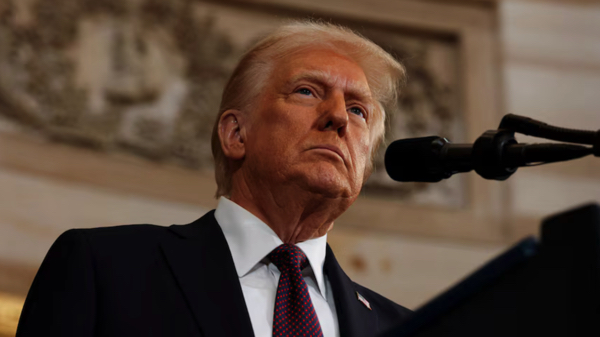
- President Trump has filed at least six active lawsuits against major media organizations, seeking tens of billions in damages.
- Major outlets including The New York Times, Wall Street Journal and BBC are now aggressively contesting claims rather than settling.
- Earlier settlements with ABC ($15-16 million) and CBS ($16 million) occurred as parent companies sought regulatory approvals.
- Legal experts note litigation serves as intimidation tactic even when cases lack merit under actual malice standards.
- Print and online outlets are fighting back while broadcast networks historically settle due to federal licensing concerns.
A turning point in press freedom battles
A significant shift is underway in the contentious relationship between President Donald Trump and America’s news organizations, as major media companies that previously settled multimillion-dollar lawsuits are now mounting aggressive legal defenses against the president’s unprecedented litigation campaign.
Trump has launched at least six active lawsuits against news organizations including The Wall Street Journal, The New York Times, the British Broadcasting Corporation, the Des Moines Register and CNN, seeking damages that collectively exceed $50 billion. This legal offensive represents an unprecedented departure from historical norms, as no previous president has pursued personal litigation against the press while in office.
The timing of this escalation carries particular significance. Earlier settlements with ABC and CBS came as their parent companies—Disney and Paramount, respectively—sought regulatory approval for corporate transactions requiring Trump administration clearance. The Paramount-Skydance merger received approval weeks after CBS paid $16 million to settle Trump’s lawsuit over its “60 Minutes” interview with former Vice President Kamala Harris.
Print media’s resolve vs. broadcast vulnerability
Mark Feldstein, the Richard Eaton chair of broadcast journalism at the University of Maryland, identifies a crucial distinction in how different media sectors respond to Trump’s pressure campaign.
“Television news has always been more timid than newspaper and magazine reporting and online reporting because it’s licensed by the federal government,” Feldstein said. He suggests networks are more likely to settle because “the bigger expense was the unknown revenge of what Trump might do.”
Print and online media, by contrast, fight back because “their economics are a lot more precarious than broadcasters’ are. So, they can’t afford to pay these large multimillion-dollar settlements the way television networks can.”
This dynamic has produced divergent outcomes. The Wall Street Journal, owned by conservative media tycoon Rupert Murdoch, recently asked a federal judge to dismiss Trump’s $10 billion suit over its reporting on his alleged connections to deceased financier Jeffrey Epstein. The New York Times is contesting a $15 billion claim challenging its coverage of Trump’s business career and the book “Lucky Loser,” with a judge dismissing the original complaint as “decidedly improper and impermissible.”
Legal standards and strategic calculations
The central legal question in these cases centers on the “actual malice” standard, which requires public figures to prove that media organizations knowingly published false information or acted with reckless disregard for the truth. This high bar has historically protected aggressive journalism, yet First Amendment lawyers acknowledge the burden of litigation itself serves as a weapon.
“He’s not winning these cases,” said Lee Levine, a lawyer who has represented multiple news organizations. “The problem is that he’s figuring out this scheme to use the law as a weapon that kind of cuts the courts out.”
Trump himself has acknowledged that saddling perceived enemies with costly depositions is part of his strategy. In January, his lawyers complained to the Supreme Court that defending against other litigation threatens to “take his focus away from his singular and unique duties as Chief Executive”—even as he pursues his own cases against the press.
The strategic value of litigation extends beyond courtroom victories. A national Republican strategist noted that “these lawsuits are designed to modify publisher behavior,” though many media companies now view Trump’s threats as “a bit of a paper tiger” given his approaching term limits.
Recent developments and Trump’s legal victories
Trump has experienced mixed results in recent weeks. A judge ruled he must produce financial documents from his trust to the BBC, which is defending against his $10 billion claim over a “Panorama” documentary that spliced together comments from his January 6, 2021 speech. The BBC apologized for the edit, but Trump dismissed the apology as insufficient, calling the broadcaster “corrupt” and “beyond fake.”
The Department of Justice withdrew subpoenas against New York Times reporters after the newspaper challenged them in court. Trump deflected criticism by saying, “We’re not after journalists. We’re after leakers.”
However, Trump did secure settlements from ABC and CBS, with payments directed to his future presidential library. Critics contend these settlements weakened press freedoms, particularly as they coincided with regulatory decisions favorable to the networks’ corporate parents.
Historical context and future implications
The current legal battles echo Trump’s earlier litigious history with media organizations. In 2020, he sued the Times over an op-ed alleging campaign collusion with Russia—a case dismissed as protected speech. Subsequent legal actions against the Washington Post and CNN met similar fates, even though the conspiracy proven to be true.
Yet the stakes have increased dramatically. Observers point to Trump’s actions—including threats to revoke broadcast licenses and the FBI’s execution of a search warrant at a Washington Post reporter’s home—as evidence of a broader pressure campaign against independent journalism.
Lisa Zycherman, vice president of legal programs at the Reporters Committee for Freedom of the Press, emphasizes the importance of media organizations “putting the administration to their burden of proving an actual malice standard, which is a really strong protection.”
As Trump approaches the end of his second term, Feldstein predicts diminishing leverage: “As Trump’s power wanes, whether that’s because his term is coming to an end or for whatever reason, there’s going to be less and less of this because this is strictly a response to power.”
The coming months will test whether media organizations maintain their legal resistance or retreat to settlements, with the BBC mediation scheduled for October serving as a critical barometer. Whatever the outcomes, these cases are reshaping the relationship between presidential power and press freedom in ways that will likely endure well beyond Trump’s tenure.
Sources for this article include:
Submit a correction >>
Tagged Under:
ABC, BBC, big government, CBS, chaos, CNN, fake news, free press, freedom, Journalism, lawsuits, Liberty, mainstream media, media fact watch, New York Times, news cartels, Resist, revolt, The Wall Street Journal, Trump, uprising, White House
This article may contain statements that reflect the opinion of the author
RECENT NEWS & ARTICLES