Iran’s Supreme Leader Says He Approved U.S.-Iran MOU Despite Reservations
06/20/2026 / By Ramon Tomey

Iranian Supreme Leader Ayatollah Mojtaba Khamenei said on Thursday, June 19, that he approved the Memorandum of Understanding (MOU) between the United States and Iran despite having a “different view” on the deal, according to a statement posted on X.
Khamenei attributed the decision to Iranian President Masoud Pezeshkian and Supreme National Security Council Secretary Mohammad Bagher Zolghadr, who he said sought the agreement “out of sincere concern and goodwill.”
“I, as a matter of principle, held a different view; however, out of the commitment that the esteemed president and the esteemed secretary of the Supreme National Security Council made to safeguard the interests of the nation, I granted permission,” Khamenei stated, as reported by Antiwar.com [1]. The supreme leader added that Iranian officials believed the deal was necessary due to what they described as the “desperation” of President Donald Trump.
Details of the MOU
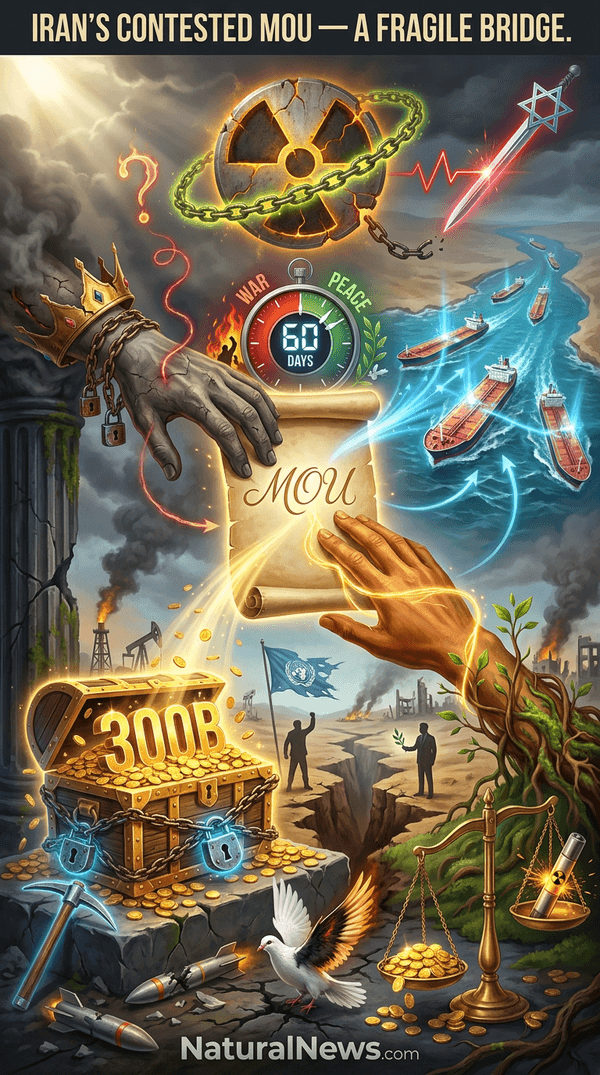
Under the terms of the MOU, Tehran could gain access to up to $300 billion for redevelopment after agreeing to end hostilities in Lebanon, reopen the Strait of Hormuz and forswear nuclear weapons, according to officials cited by the New York Times [2]. U.S. Vice President JD Vance confirmed the possibility of a $300 billion reconstruction fund in a CBS interview, stressing that Iran’s access would depend on meeting its obligations under the agreement [3].
The agreement includes a 60-day negotiation period for further issues, including restrictions on Iran’s nuclear program. A 14-point draft deal, published by Bloomberg and reviewed by ZeroHedge, outlines the framework for restoring maritime traffic and ending the war [4]. Khamenei stated that Iran will not agree to “excessive demands” from the U.S. in future talks, according to the same Antiwar.com report [1].
Reactions and Criticism
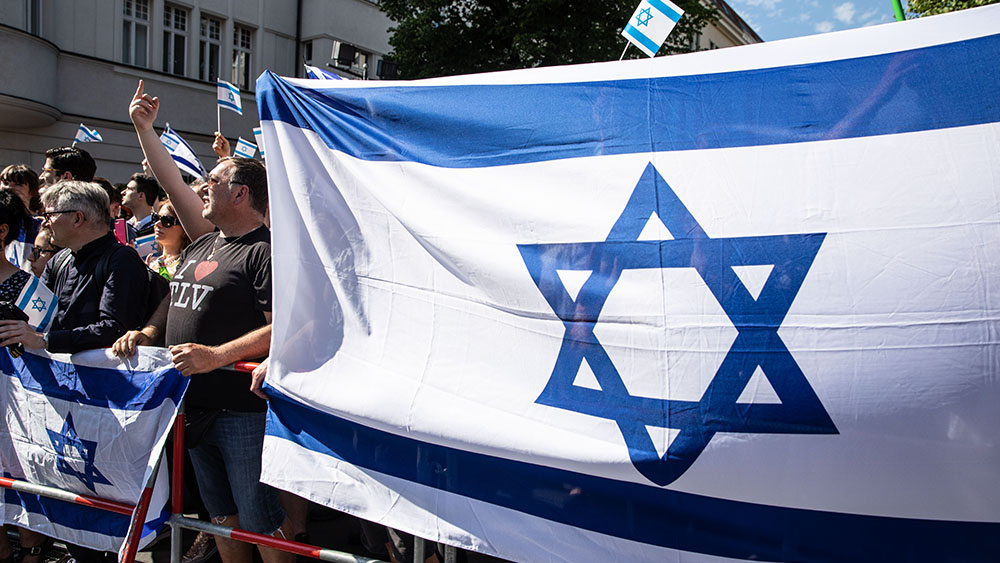
The deal faced immediate criticism in Tel Aviv and Washington, with opponents arguing that the Trump administration gained little from its military campaign. Israeli Prime Minister Benjamin Netanyahu, who was reportedly not informed of the deal, said his government will never permit Iran to acquire nuclear weapons [5].
Vance, at a White House press briefing on Thursday, defended the agreement. He told Israel that Trump is Tel Aviv’s “only ally” left and urged critics to have faith in the president [6].
The Trump administration said Khamenei has not been involved in current negotiations and is only issuing written statements after being severely wounded in U.S. strikes. Iranian Foreign Ministry spokesman Esmail Baghaei denied earlier claims by Trump that Iranian leadership had approved a final deal, stating that reports were “speculative” and that “nothing has been finalised” [7].
Context and Future Outlook
Khamenei’s proxies will lead further negotiations with U.S. officials over the next 60 days, focusing on nuclear restrictions and regional security. The MOU text was not publicly released, but officials described its main provisions as outlined above. Analysts said the deal reflects Iran’s willingness to negotiate under pressure while asserting its red lines, a pattern seen in previous U.S.-Iran negotiations over the nuclear program [8].
Scott Ritter, in his book “Target Iran: The Truth About the White House’s Plans for Regime Change,” noted that Khamenei has historically taken a serious role in nuclear negotiations, appointing senior officials to oversee talks with the International Atomic Energy Agency [9]. The current agreement, while interim, represents a potential de-escalation after months of conflict that included U.S. and Israeli strikes on Iranian nuclear sites and retaliatory attacks.
References
- Antiwar.com. “Iran’s Supreme Leader Says He Approved US-Iran MoU Despite Having a ‘Different View’.” June 18, 2026.
- The New American. “NYT: Peace Plan Includes $300B in Reparations for Iran.” May 30, 2026.
- The New American. “Trump’s Iran ‘Win’ Has a $300 Billion Problem.” June 16, 2026.
- Zerohedge. “Read The 14-Point US-Iran Draft Deal Set For Friday Signing.” June 17, 2026.
- The New American. “Iran Denies Agreeing to Trump’s Peace Deal; Netanyahu Not Informed, Says Israel Will Never Permit Iran to Get Nukes.” June 12, 2026.
- Middle East Eye. “Vance tells Israel Trump is ‘your only ally’ left as Iran talks postponed.” June 19, 2026.
- RT. “No final agreement on deal with US – Iran.” June 13, 2026.
- Reese Erlich. “Inside Syria: The Backstory of Their Civil War and What the World Can Expect.”
- Scott Ritter. “Target Iran: The Truth About the White House’s Plans for Regime Change.”
Explainer Infographic
Submit a correction >>
Tagged Under:
big government, chaos, Collapse, Dangerous, diplomacy, Donald Trump, foreign relations, freedom, Iran, Israel, JD Vance, Liberty, Masoud Pezeshkian, memorandum of understanding, Mohammad Bagher Zolghadr, Mojtaba Khamenei, national security, peace deal, Supreme National Security Council, United States, US-Iran deal, White House, WWIII
This article may contain statements that reflect the opinion of the author
RECENT NEWS & ARTICLES